
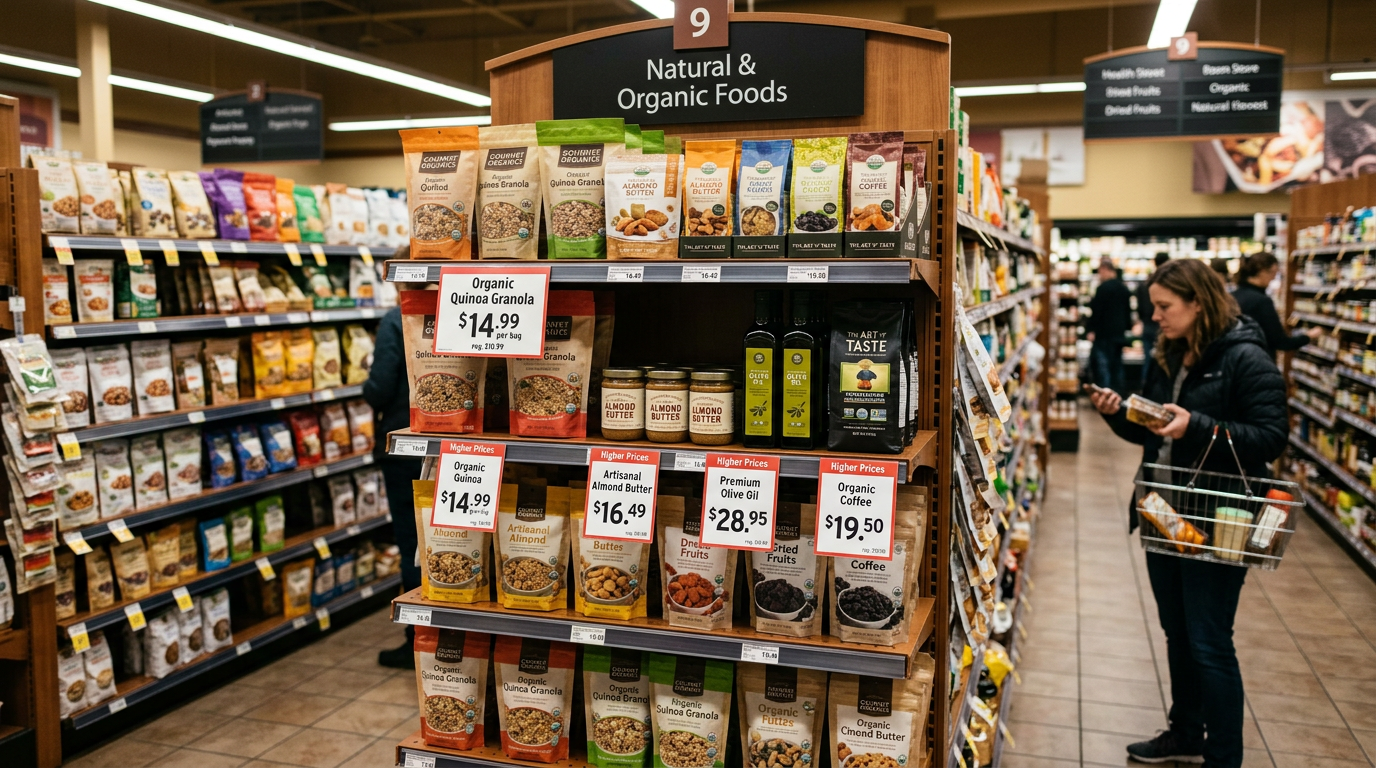
Imagine you’re walking into a store wanting to buy something simple: a pair of sneakers, a hoodie, food with friends, or even just a drink after school.
A few years ago, that same purchase might have felt manageable. But when you check the price tag, you think: “Wasn’t this cheaper before?”
For many teenagers, this feeling has become normal. It feels like everything costs more, but the amount of money available to us has not changed. As soon as we start using our own money (and not our parents’), we realize just how expensive things have gotten. A part-time job might pay a few dollars more than it did years ago, but somehow independence still feels just as far away.
Here’s the big question:
If people are earning more money than before, why does it still feel impossible to afford things?
The answer is not only that people are spending too much or that teenagers need to “save better.” Even though budgeting and financial habits do matter, there are larger economic forces shaping the way we experience money.
To understand why money feels harder today, we have to look beyond just our wallets and analyze three connected ideas:
inflation, wages, and the changing cost of independence.
The Price Tag Changed—But Why?
The first reason everything feels more expensive is inflation.
Inflation is the general increase in prices over time. When inflation happens, money loses some of its purchasing power (the amount of goods and services you can buy with one unit of money), meaning the same amount of money can buy fewer things.
Imagine you receive $20 for your birthday.
Five years ago, that $20 could buy more than it can today. According to the U.S. Bureau of Labor Statistics Consumer Price Index, overall consumer prices increased by roughly 20% between 2020 and 2025. In other words, something that cost $20 in 2020 would cost around $25 today just to represent the same purchasing power.
The number printed on the bill did not change. The value of what it can buy did.
[Source: U.S. Bureau of Labor Statistics, Consumer Price Index]
This is why inflation can feel out of the blue. Nobody walks into a store and sees a sign saying:
“Your money is worth less now.”
Instead, we slowly notice it through everyday experiences:
→ the drink that costs a dollar more
→ the restaurant meal that used to be affordable
→ the clothes that seem more expensive
→ the grocery bill that is getting more expensive
For teenagers, these changes are especially noticeable because many of us are entering the world of money for the first time.
A teenager earning their first paycheck today is comparing prices with the expectations created by childhood memories and what their parents bought for them. We remember when things felt cheaper, but we are now entering a world where those prices no longer exist.
Why Inflation Happens
Inflation is not simply caused by one single thing.
Sometimes it happens because product demand increases. When many people want a product but there is not enough supply available, companies can raise prices.
Other times, costs increase for businesses. If a restaurant has to pay more for ingredients, rent, or employee wages, those higher costs often become reflected in the prices customers pay.
A small business owner (usually) does not wake up one morning and randomly decide:
“I want to charge more.”
They are often responding to a chain reaction happening throughout the economy.
For example, a restaurant may face:
→ higher food costs from suppliers
→ increased rent
→ rising utility bills
→ higher labor expenses
Eventually, the price of a meal may increase because the cost of creating that meal has increased.
Inflation affects more than just the consumers. It changes the decisions that businesses, workers, and families have to make.
Why Inflation Happened: Case Study
Now that we’ve defined inflation as a concept, we can dive into the bigger story.
In recent years, the U.S. experienced a combination of economic disruptions that changed how much things cost and how easily people could afford them.
The COVID-19 Supply Shock
One major factor was the COVID-19 pandemic. In 2020 and 2021, global supply chains were disrupted as factories closed, shipping slowed, and businesses struggled to access materials (all due to the lockdown). Products that once moved quickly around the world became harder and more expensive to produce.
When fewer goods were available but people still wanted to buy them, prices increased. (Remember the toilet paper craze?)
[Source: Federal Reserve research on inflation and supply constraints]
Government Support and Increased Demand
During the pandemic, the U.S. government introduced major economic relief programs, including stimulus payments (direct cash payments from government to individuals for financial relief and to encourage spending), expanded unemployment benefits, and support for businesses.
These programs helped prevent a deeper economic crisis by allowing families and businesses to continue operating during an unprecedented shutdown.
However, these policies also increased consumer spending power at a time when many industries were still struggling to produce enough goods.
Economists continue to debate the exact impact of government spending on inflation, but most agree that inflation resulted from multiple overlapping factors: supply shortages, strong consumer demand, labor market changes, and global events.
[Source: Congressional Budget Office analysis of COVID relief and economic recovery]
Energy, Food, and Global Events
Energy and food costs also played a major role. Russia’s invasion of Ukraine in 2022 disrupted global energy and agricultural markets. Because oil is involved in transportation, manufacturing, and production, changes in energy prices affect nearly every part of the economy.
Higher fuel costs can increase:
→ shipping expenses
→ manufacturing costs
→ grocery prices
→ household expenses
The International Monetary Fund noted that global commodity price increases contributed significantly to inflation across many countries after 2021.
[Source: International Monetary Fund, Global Inflation Reports]
The Labor Market Shift
Another important factor was the labor market. After the pandemic, many businesses faced worker shortages and increased wages to attract employees. According to the Bureau of Labor Statistics, average hourly earnings in the U.S. increased significantly between 2020 and 2024.
Higher wages helped many workers, but businesses also faced higher operating costs. Some companies responded by increasing prices to maintain profitability (which is what was discussed above when defining inflation).
[Source: U.S. Bureau of Labor Statistics, Average Hourly Earnings Data]
The Problem: Wages Do Not Always Keep Up
One of the biggest reasons people feel financially stuck is that prices and wages do not always increase at the same speed.
If prices rise by 8%, but someone’s income only rises by 3%, they are technically earning more money—but they have less purchasing power. This is the difference between:
Nominal Wage: the literal number of dollars you earn.
Real Wage: your wage adjusted for inflation, showing your purchasing power.
According to the Federal Reserve, inflation-adjusted income trends can look very different from simply looking at dollar amounts. A bigger paycheck does not always mean a better financial situation.
For teenagers, this appears in a smaller but similar way: Imagine you get your first job at a local store. You make $15 an hour and work 10 hours per week, which would give you about $150 before taxes.
It might sound like a lot of spare money (especially if you have no taxes or bills to pay)—until you start calculating what that money can actually do.
That pair of sneakers you wanted might cost $100.
A meal out with friends might cost $20-30.
Transportation, activities, subscriptions, and personal expenses also add up quickly.
The problem is not that $150 is meaningless; the problem is that the cost of participating in everyday life has increased.
Why Teens Feel Especially Stuck
Us teenagers are in a unique financial position.
We are old enough to understand that money matters, but usually too young to have full control over our finances.
Many teenagers:
→ depend on parents for major expenses
→ earn limited income
→ have little experience with financial systems
→ are preparing for adulthood without knowing what it costs
This solidifies the gap between awareness and ability.
A teenager might understand that saving is important, but saving $500 feels very different when you are earning money from a part-time job (or even just getting money from birthdays and holidays) compared to when you have a full-time career.
A teenager might understand investing is valuable, but investing feels distant when they are still figuring out how to afford their own purchases.
When prices rise, people often feel like they are losing freedom.
A teenager might think:
“I worked all week. Why can I only afford one thing?”
That feeling comes from the difference between effort and reward. The amount of work required to afford something changes when prices increase.
The pair of sneakers you wanted is no longer just a pair of sneakers. It represents:
→ hours spent working
→ opportunities missed (like investing, etc)
→ choices between saving and spending
The problem here is that young people are entering a financial world that is increasingly complex and hard to break into.
The Cost of Being Independent
Financial independence sounds simple in theory:
Earn money → save money → pay for your own life.
But the reality is much more complicated.
Independence is more than just having income. It requires being able to afford:
→ housing
→ transportation
→ healthcare
→ education
→ food
→ emergencies
→ savings
Housing is one of the clearest examples. According to the Federal Reserve, housing costs have become one of the largest financial pressures facing many Americans, especially younger generations entering adulthood.
So not only is the challenge earning money, but it’s earning enough money to participate in modern life.
The Bigger Picture: Is Financial Independence Getting Harder?
The answer is complicated.
Technology has created more ways than ever to earn money. Teenagers today can freelance, create content, sell products online, and learn financial skills earlier than previous generations (see my Financial Literacy 101 series →).
But at the same time, many traditional paths to independence have become more challenging: housing costs have increased, education has become more expensive, and everyday expenses have grown.
The result is a generation that is more financially aware, but also more financially anxious.
Many teens dream of getting rich young (who wouldn’t?). But the reality is that financial independence is not about becoming wealthy overnight. It is about having enough knowledge and resources to make choices that can lead to success.
What Can Teenagers Actually Do?
While larger economic forces are outside of individual control, understanding them creates power.
The first step is recognizing that money has two sides:
Personal decisions and economic systems.
Personal decisions matter:
→ learning how to budget
→ understanding needs versus wants
→ saving consistently
→ building skills that increase future income
But systems matter too:
→ inflation affects prices
→ wages affect earning ability
→ economic conditions affect opportunities
The Takeaway
When us teenagers say:
“Everything is so expensive now,”
We are not just complaining about prices. We are noticing a real economic shift.
The price of a drink, a pair of sneakers, or food with friends represents the relationship between money and everyday life.
Understanding inflation, wages, and economic systems does not magically make things cheaper.
But it changes the way we see money.
Because becoming financially independent is not only about learning how to manage money; it is about understanding the world that money exists within.
And before we can make smarter financial decisions, we first have to understand the forces shaping those decisions (and the way that prices will increase).